
Discover Potential. Develop Purpose. Shape the Future.
An Education Beyond the Classroom. A Foundation for Life.
At New Ark Global Academy, we believe education is more than the acquisition of knowledge. It is the process of discovering individual potential, developing the ability to think independently, and preparing students to navigate a world that continues to evolve.
Founded in 2019, New Ark Global Academy (NGA) is a private, faith-based hybrid high school in Seoul, South Korea, offering an American-style college-preparatory education for students in Grades 9–12.
An education beyond the classroom.
Our educational approach brings together academic rigor, individualized learning, advanced coursework, Christian values, and opportunities for exploration beyond the traditional classroom.
We seek to prepare students not only for university admission, but for the intellectual, technological, ethical, and personal challenges they will encounter throughout their lives.
E + DUCA + TION
Drawing Out the Potential Within
The Latin ideas associated with education—nurturing and bringing forth—express an essential part of NGA's philosophy.
We believe students are not empty vessels waiting to be filled with information. Each student comes with individual interests, abilities, experiences, and possibilities.
The role of education is to recognize these qualities, guide their development, and provide the knowledge and experiences needed to transform potential into meaningful achievement.
At NGA, education is not defined only by what a student knows upon graduation. It is also reflected in who the student has become and what the student is prepared to pursue next.
Rooted in Academic Excellence
New Ark Global Academy provides an American-style high school curriculum supported by individualized academic planning.
Students complete foundational studies in English, mathematics, science, social studies, religion, and electives, with opportunities for Advanced Placement coursework, independent research, and specialized academic exploration.
NGA maintains established graduation requirements, academic records, and an unweighted GPA system.
At a Glance
- Established in 2019
- Grades 9–12
- 24-Credit NGA Graduation Framework
- English-Language Instruction
- CEEB Code: 017620
- Hybrid Online & In-Person Educational Model
Preparing Students for a World That Has Not Yet Been Written
The knowledge students need today is only part of what they will need tomorrow.
Artificial intelligence, technological innovation, global economic developments, and changes across professional fields are transforming the world students will enter.
NGA's educational vision emphasizes not only academic foundations but also adaptability, independent thinking, digital literacy, ethical judgment, and the ability to apply knowledge to unfamiliar challenges.
We believe future readiness begins when students learn to ask meaningful questions, investigate problems, understand their interests, and take ownership of their development.
Featured Themes
Major-Specific Exploration
Connect academic subjects with potential university majors and areas of professional interest.
Artificial Intelligence & Digital Literacy
Develop an understanding of emerging technologies and responsible digital practices.
Research & Independent Inquiry
Learn to develop questions, evaluate information, and communicate original work.
Faith & Character
Consider the ethical responsibilities that accompany knowledge, opportunity, and leadership.
Discover What You Want to Study. Understand Why It Matters.
At NGA, we believe that students should have opportunities to investigate their academic interests before they enter university.
Alongside their high school curriculum, students can be guided toward subject combinations and projects related to fields such as business, engineering, technology, medicine, social sciences, communication, and the arts.
A student's intended major should be more than a title selected on a university application. It should represent a developing interest supported by learning, exploration, and meaningful work.
Learning Becomes Meaningful When It Is Applied
Academic knowledge becomes more valuable when students have opportunities to use it.
Research projects, academic competitions, creative work, community service, journalism, leadership activities, and practical experiences can help students connect classroom concepts to real questions and responsibilities.
NGA's educational approach recognizes the importance of developing both academic understanding and the ability to act upon that understanding.
Knowledge With Purpose. Leadership With Integrity.
As a Christian educational institution, NGA believes intellectual development and character formation are connected.
Our faith-based educational identity emphasizes responsibility, service, integrity, reflection, and consideration for others.
We seek to help students understand that the purpose of education extends beyond personal success. Knowledge and ability also create opportunities to contribute to communities and respond to the needs of others.
A Community of Learners With Different Paths and Shared Possibilities
NGA's international school community has included students from South Korea, the United States, China, and the Philippines.
Our individualized educational model recognizes that students may come from different educational backgrounds and pursue different academic goals.
Through coursework, guidance, research, creative work, and school-community participation, NGA provides an educational environment in which students can explore their interests and develop their abilities.
Life at NGA
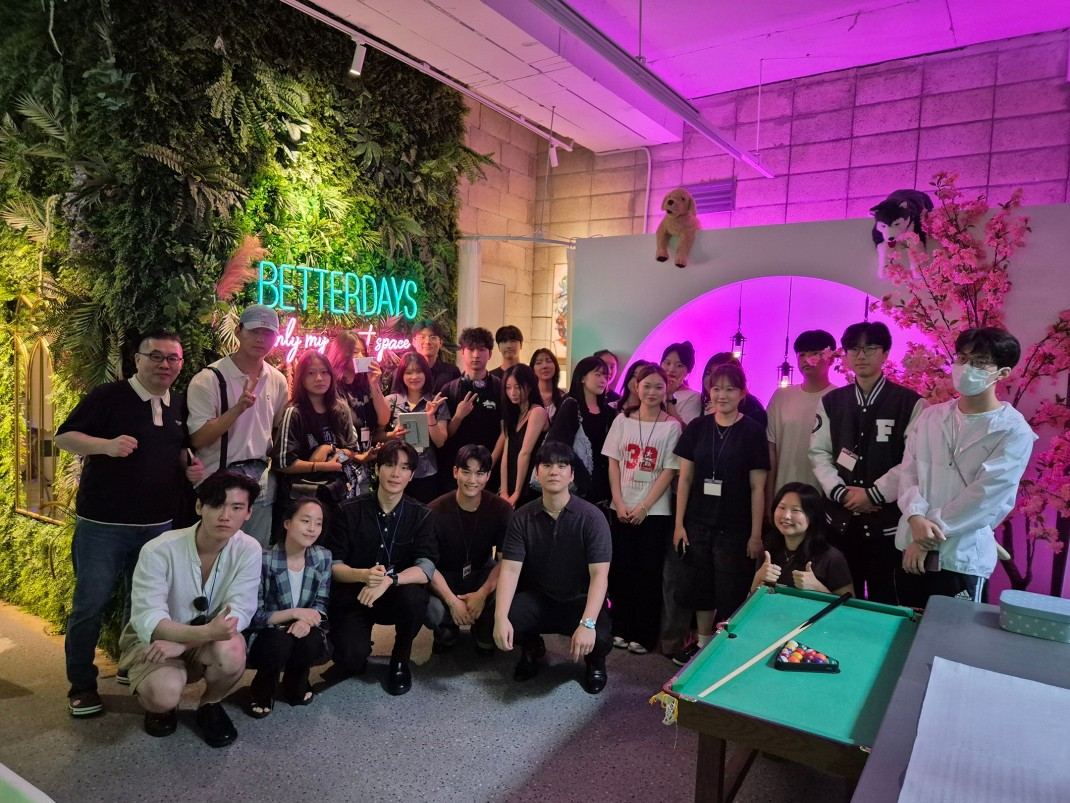
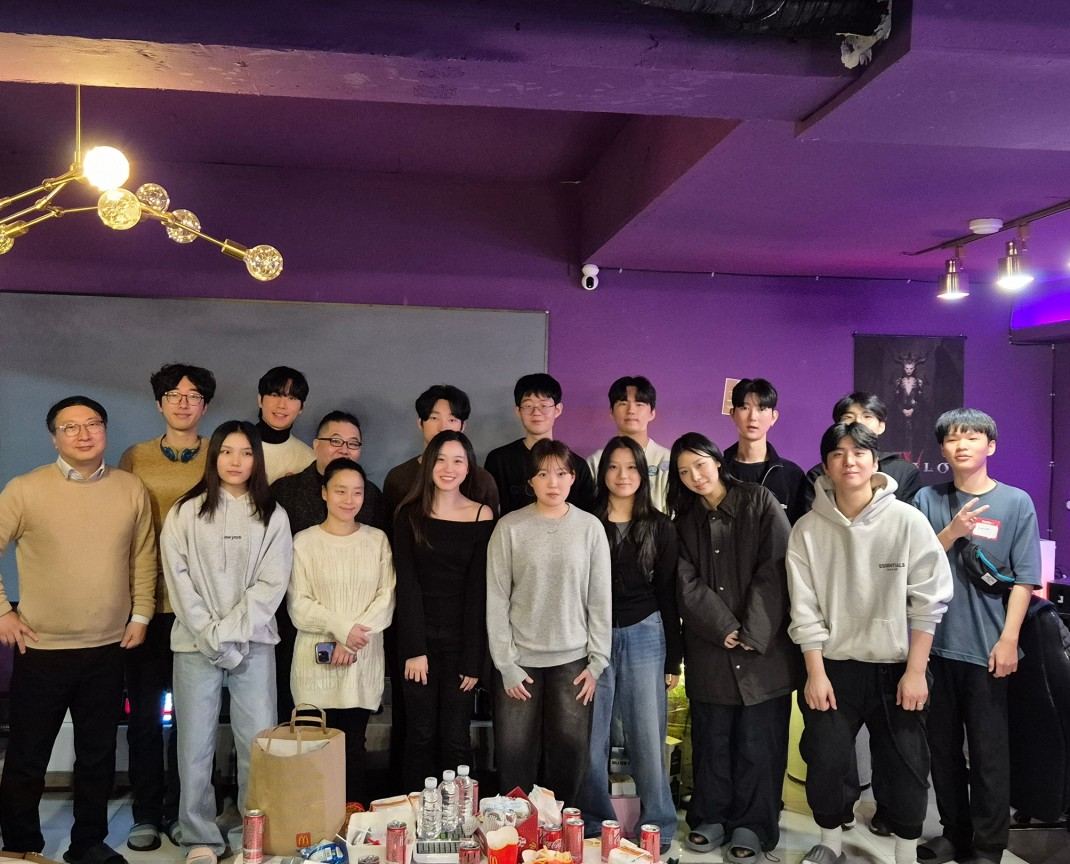
All photosNGA Alumni & Students Gathering
Alumni and current students together for welcome remarks, games, food and a day of reconnecting.
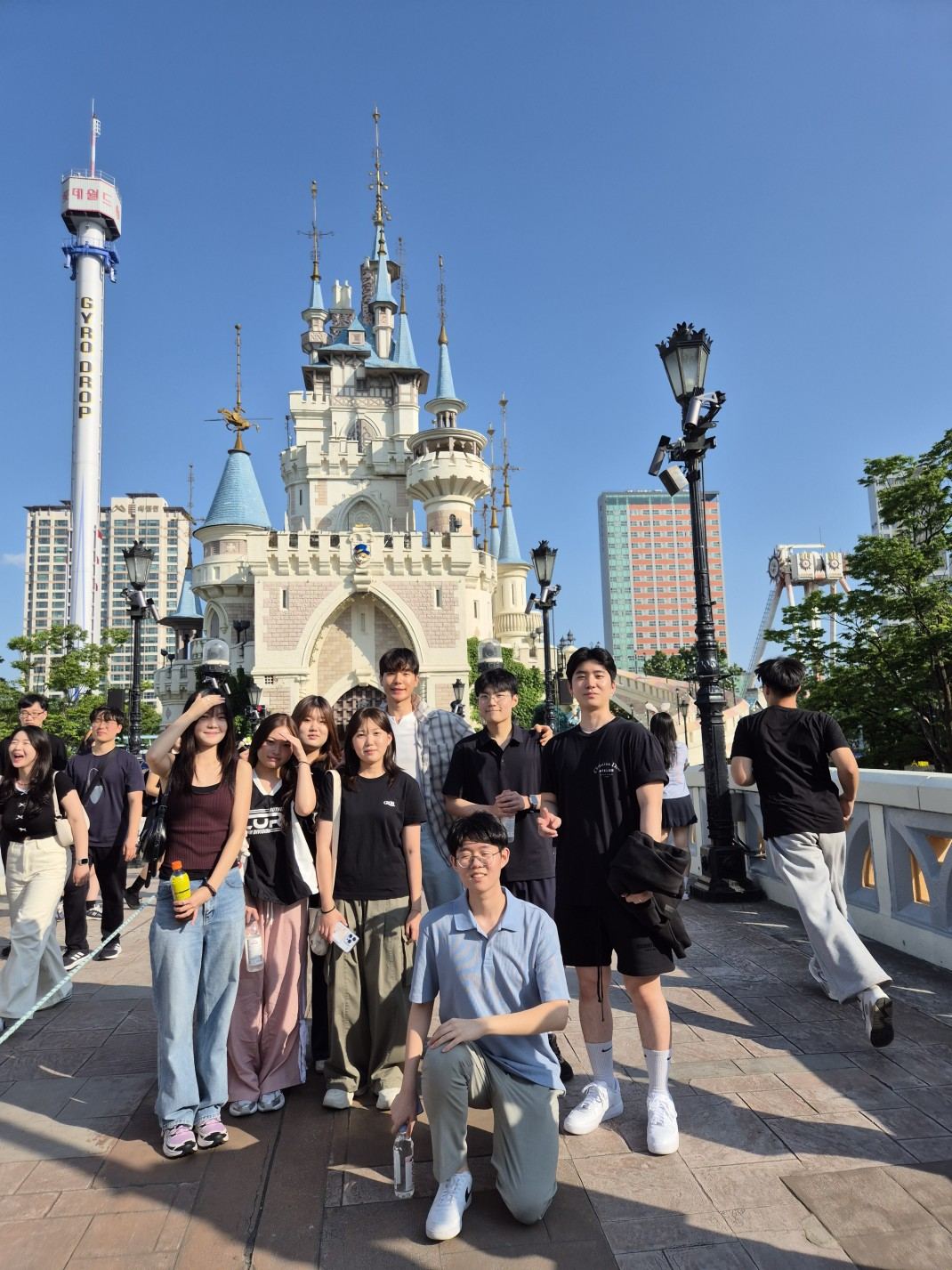
School Trip
Students exploring the city together on a school outing.
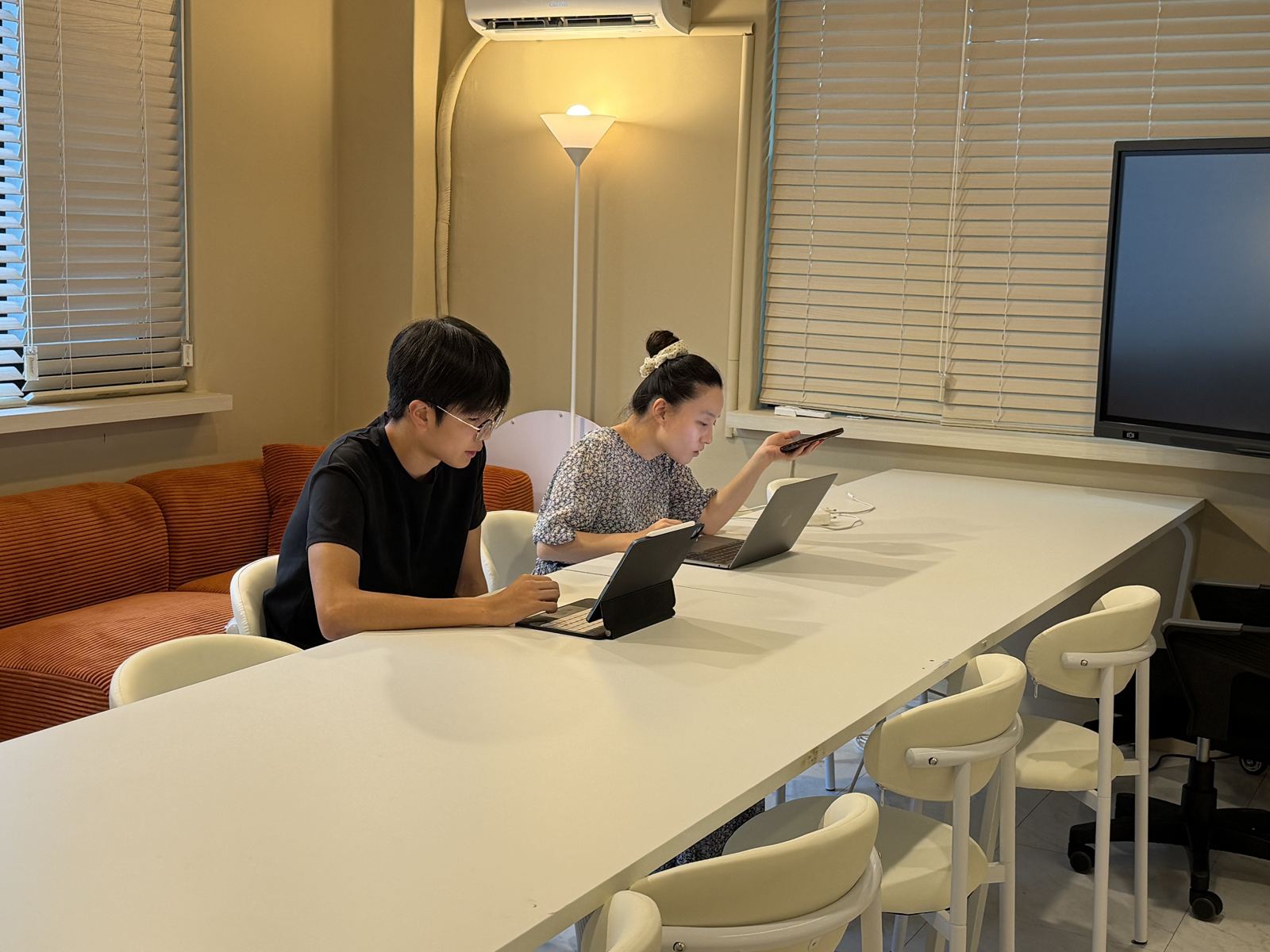
Classes & Study
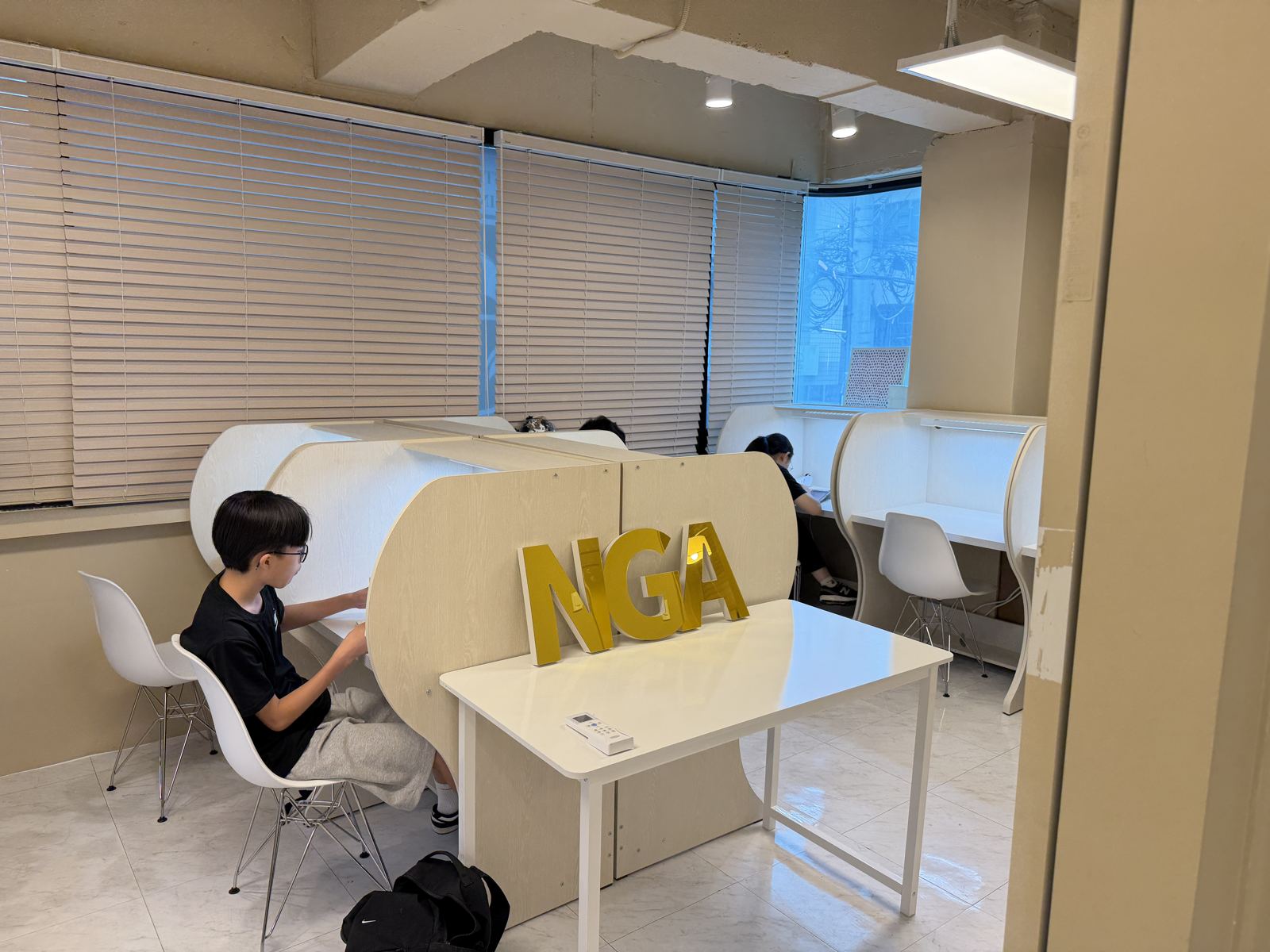
Seminars, counseling sessions and focused independent study in our Gangnam learning spaces.
Your Future Begins With What You Discover Today.
Explore New Ark Global Academy's educational philosophy, academic program, and school community.
Our School
About New Ark Global Academy
Independent Education. Individual Development. Purposeful Preparation.
Who We Are
New Ark Global Academy is an independent Christian educational institution established in 2019 in Seoul, South Korea.
Our school provides an American-style college-preparatory curriculum for Grades 9–12 through a hybrid educational model combining online coursework and in-person academic support.
NGA's educational approach is centered on individualized academic planning, academic responsibility, advanced learning, and opportunities for meaningful exploration.
We recognize that students enter secondary education with different experiences, strengths, interests, and goals. Our role is to provide an academic foundation while supporting students as they develop direction for their educational futures.
Our Approach to Education
NGA approaches education as the development of the whole student.
Academic knowledge provides an essential foundation. Independent thinking allows students to examine ideas and make informed decisions. Character and ethical judgment help students understand their responsibilities. Exploration encourages students to discover interests and consider future possibilities.
By connecting these elements, NGA seeks to cultivate students who are academically prepared, personally responsible, and ready to continue learning beyond high school.
What Defines NGA
Academic Foundations
An established curriculum with clearly defined graduation requirements and grading policies.
Individualized Learning
Educational planning that reflects prior academic work, student interests, and intended educational pathways.
Advanced Academic Study
Opportunities for AP coursework, research, and academic enrichment.
Future-Oriented Learning
An educational vision emphasizing technology, academic specialization, adaptability, and practical problem-solving.
Christian Education
A faith-based academic identity grounded in character, service, responsibility, and integrity.
Our Institutional Identity
NGA independently maintains its graduation requirements, academic records, and diploma.
The school also maintains separately defined academic relationships and educational affiliations.
Philosophy of Education
The NGA Philosophy of Education
E + DUCA + TION
To Draw Forth. To Guide. To Become.
The word education is connected to the Latin concepts of educare, to nurture or bring up, and educere, to lead or bring forth.
These ideas form the inspiration for New Ark Global Academy's educational philosophy.
We believe the purpose of education is not simply to transfer information from teacher to student. It is to recognize individual potential, nurture intellectual and personal development, and help students transform their abilities into meaningful action.
At NGA, we express this philosophy through three interconnected ideas.
E — Draw Forth
Every student enters education with interests, experiences, questions, and abilities that may not yet be fully developed.
We believe the first responsibility of education is to recognize this individuality.
Rather than expecting every student to follow an identical path, NGA's philosophy begins with understanding students as individuals.
Academic exploration, personal reflection, and opportunities to encounter new subjects can help students discover interests they may not have previously recognized.
Education begins with discovery.
DUCA — Guide and Nurture
Potential requires more than recognition. It requires guidance, discipline, practice, and an environment in which development is possible.
A strong academic foundation helps students acquire the knowledge needed for further learning. Individualized guidance helps them consider their goals and make informed academic decisions.
Through advanced coursework, research, specialized academic exploration, and Christian education, NGA seeks to support intellectual development alongside personal responsibility.
Education continues through purposeful development.
TION — A Continuing Process of Becoming
Education is not completed when a course ends or a diploma is awarded.
Knowledge gains meaning when students can apply it, reconsider it, and use it to address new challenges.
A student who has developed intellectual curiosity, ethical judgment, and the ability to learn independently is better prepared to navigate changing circumstances.
Education is an ongoing process of becoming.
E + DUCA + TION is NGA's symbolic interpretation of education, inspired by its Latin roots.
From Philosophy to Practice
Our philosophy guides four areas of educational development.
1. Discover
Students investigate their abilities, interests, and academic possibilities.
2. Develop
Students build academic knowledge, analytical ability, discipline, and personal responsibility.
3. Apply
Students connect learning to research, projects, technology, creative work, and practical challenges.
4. Lead
Students develop the judgment, confidence, and character needed to make meaningful contributions.
Preparing Students for More Than the Next Examination
Academic grades and university qualifications are important. They are also only part of education.
Students will enter a world in which technology changes, information expands, and professional expectations evolve.
Our philosophy is that education should equip students with the capacity to continue learning, evaluate unfamiliar ideas, understand their responsibilities, and pursue purposeful goals.
Discover Potential. Develop Purpose. Shape the Future.
That is the philosophy of education at New Ark Global Academy.
History
Our History
Established in 2019. Continuing to Develop.
The Founding of NGA
New Ark Global Academy was founded in Seoul, South Korea, in 2019 as a faith-based educational institution.
From its beginning, NGA has focused on providing an American-style secondary education through individualized academic planning and a flexible educational model.
The school combines foundational coursework, advanced academic opportunities, and Christian education with online learning and in-person support.
Our Educational Development
NGA's educational approach recognizes that students may follow different academic pathways.
This individualized model allows students' prior academic work, interests, and university goals to be considered in academic planning.
Over time, NGA's documented school profile has come to encompass AP coursework, research-related learning, student activities, academic partnerships, and a range of college-preparatory opportunities.
Our Institutional Timeline
New Ark Global Academy Established
NGA is founded in Seoul, South Korea.
Seven Years of Operation
As of 2026, NGA has completed seven years of operation, and its organization-wide counseling services have served more than 120 students since 2019.
ACSI School Member
NGA is a school member of the Association of Christian Schools International (ACSI) for the 2026–2027 school year.
NGA School Profile
The school documents its academic requirements, course opportunities, grading policies, institutional status, leadership, and university outcomes through its official 2026–2027 School Profile.
Continuing Our Development
As education changes, NGA's educational vision continues to emphasize both academic standards and preparation for future opportunities.
Our goal is to preserve the importance of academic foundations while developing meaningful opportunities for research, interdisciplinary study, technological literacy, and individualized academic growth.
Leadership & Faculty
School Leadership & Faculty
Academic Responsibility Begins With Institutional Leadership.
Our Faculty & Academic Community
The quality of an educational institution depends on the people responsible for teaching, supporting, and guiding students.
NGA's educational model combines academic coursework with individualized planning and in-person support.
Dr. James Hwang
Provides institutional leadership, certifies NGA-issued transcripts, and leads chapel and the spiritual life of the school.
Esther Hwang
Serves in the school's educational and administrative leadership.
Samuel Hwang
Supports educational planning and preparation for higher education.
Injeong Cho
Serves as the contact point for families seeking information about NGA and its academic program.
Paul Choe
Teaches mathematics and supports students through academic counseling.
Charlie Noh
Guides students through academic planning, course selection and preparation for university.
Dr. Rena Kim
Guides students through academic planning, course selection and preparation for university.
Minjun Lee
Teaches mathematics with a focus on structured problem-solving.
Hahye Woo
Teaches English language arts, reading and academic writing.
Phil Victor
Teaches English language arts, reading and academic writing.
Sean Park
Teaches science courses grounded in inquiry and evidence-based reasoning.
Jihyeon Ko
Teaches science courses grounded in inquiry and evidence-based reasoning.
Emily Carter
Teaches history and social studies with an emphasis on analysis and discussion.
Seoyeon Han
Teaches history and social studies with an emphasis on analysis and discussion.
Michael Turner
Leads physical education and supports a healthy, active lifestyle.
Jiwoo Kang
Supports student records, transcripts and registrar services.
Yuna Choi
Supports families with admissions inquiries and school communication.
Hyunwoo Shin
Supports school operations, scheduling and campus administration.
Contact School Administration
For general academic or institutional inquiries, please contact the school.
Email: registrar@newarkglobal.org
Telephone: +82-2-6925-1712
Institutional Identity
Institutional Identity & Affiliations
An Independent School With Defined Academic Responsibilities.
New Ark Global Academy
NGA is an independent Christian educational institution based in Seoul, South Korea.
Established in 2019, the school independently maintains its academic program, graduation requirements, official school records, and NGA diploma.
NGA's educational activities include relationships with organizations supporting different aspects of its academic and co-curricular programs.
Institutional Information
Established: 2019
School Type: Private, Faith-Based, Hybrid
Grade Levels: 9–12
Language of Instruction: English
Location: Gangnam-gu, Seoul, South Korea
CEEB Code: 017620
Licensing & Membership
NGA's official School Profile identifies a licensing relationship with the Assembly of the Presbyterian Church in Korea.
The profile also identifies membership in the Association of Alternative Schools in Korea, reference number 105828225.
NGA is an ACSI school member for the 2026–2027 academic year. ACSI membership is distinct from accreditation.
Academic & Educational Relationships
College Board
NGA's AP courses are subject to the AP Course Audit authorization process for the applicable school year.
The Duke of Edinburgh's International Award
NGA identifies itself as a licensed Award Centre.
Penn Foster High School
NGA maintains a separate academic partnership supporting eligible students who pursue an independently awarded Penn Foster diploma.
Penn Foster is an accredited U.S. online high school. Its accreditation does not extend to NGA or NGA-issued diplomas.
Our Commitment to Academic Transparency
NGA provides official information about its academic structure, credit requirements, grading scale, and institutional relationships through its School Profile and academic policies.
Campus & School Profile
Our Campus & School Community
An Individualized Learning Environment in Seoul.
Our School Environment
New Ark Global Academy is located in Gangnam-gu, Seoul, South Korea.
Our hybrid educational model combines online study with in-person academic support.
Students follow academic plans suited to their coursework, educational goals, and applicable requirements while remaining connected to the school's academic community.
An International Community
NGA's school community has included students from South Korea, the United States, China, and the Philippines.
Different educational backgrounds and perspectives contribute to an environment in which students can learn from one another and explore varied academic interests.
Inside NGA
Our Learning Spaces
Reception, classrooms and study spaces at our Gangnam campus.

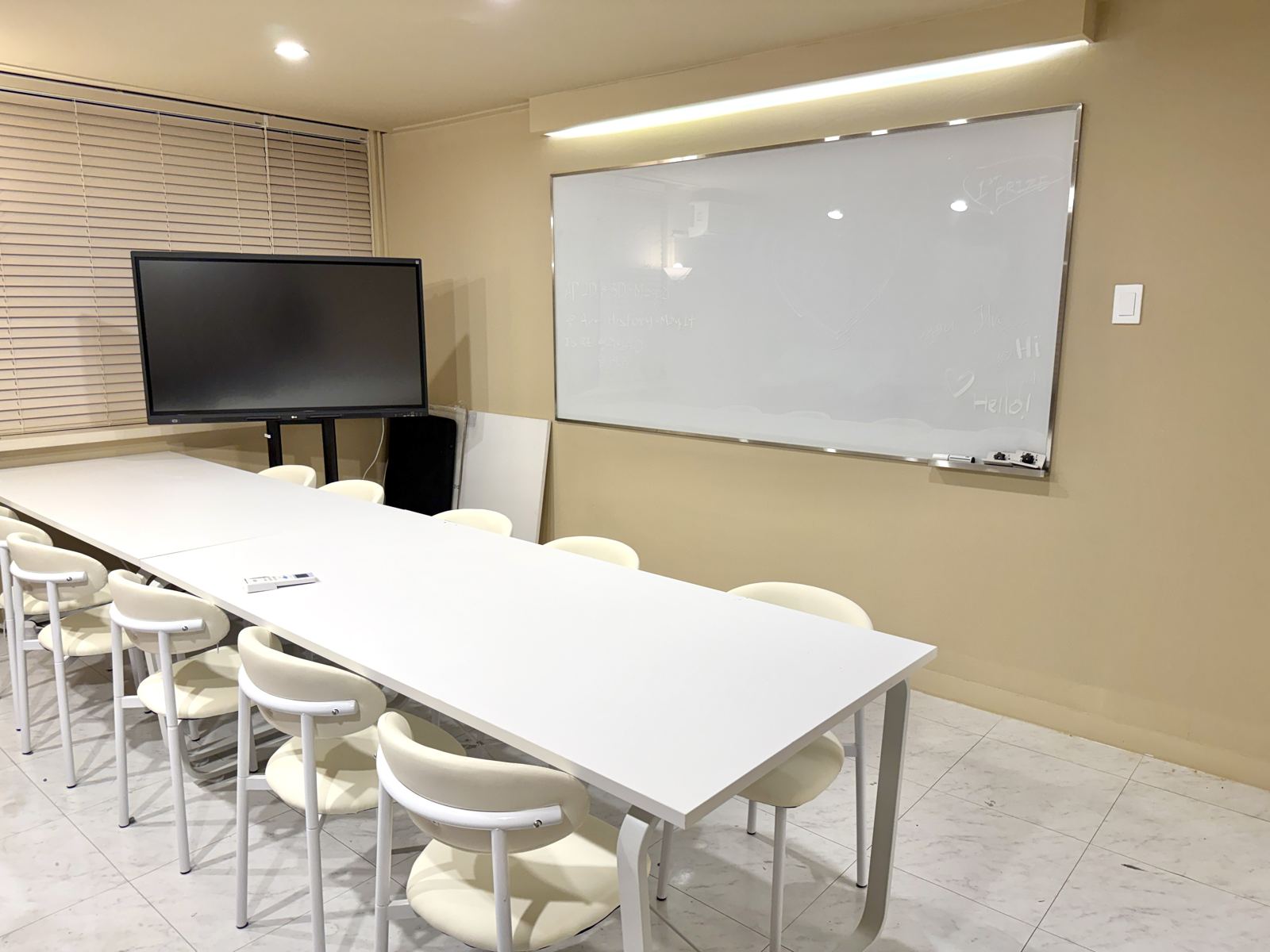
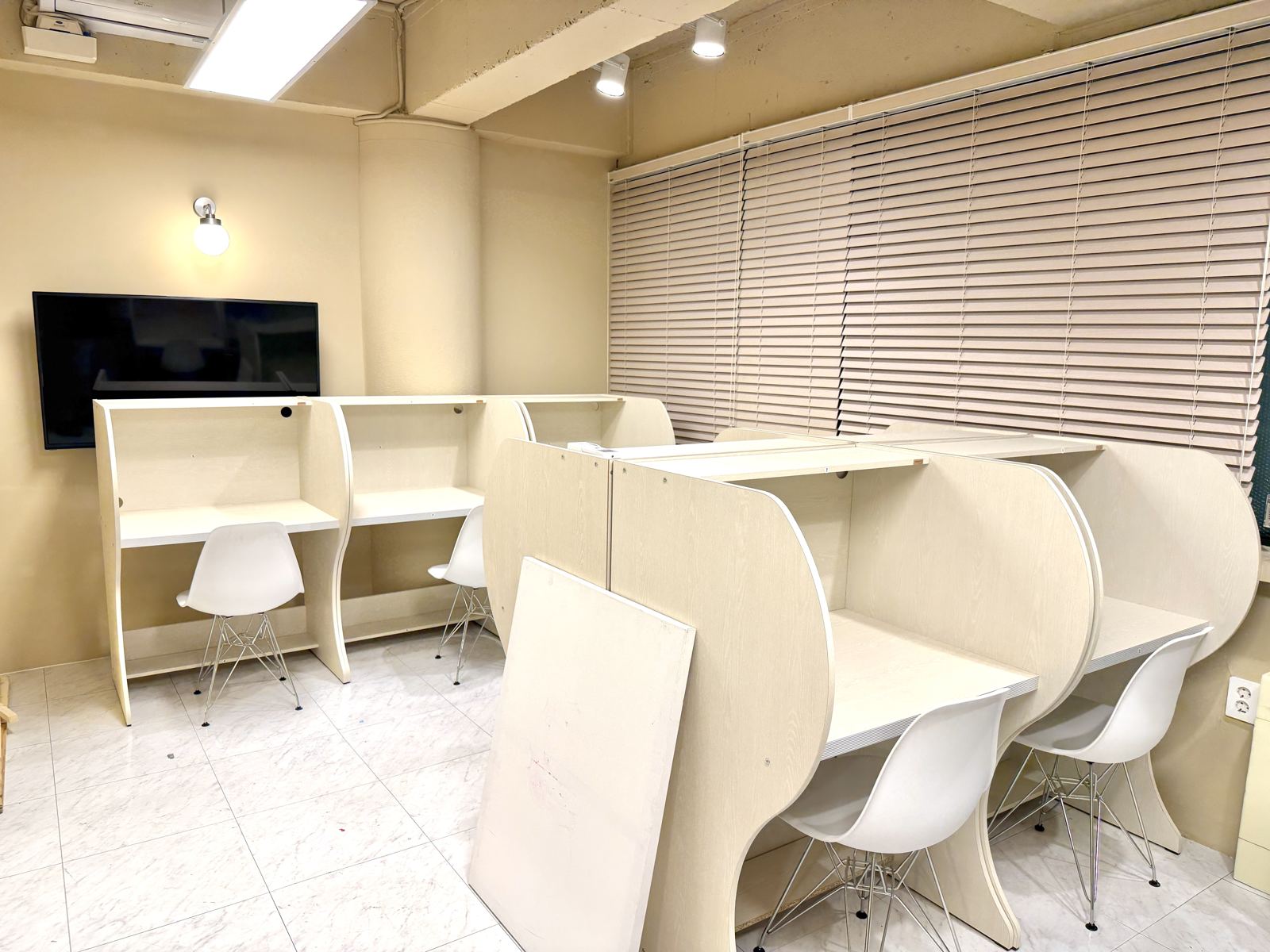
Our Students
Seminars, counseling sessions and focused independent study.
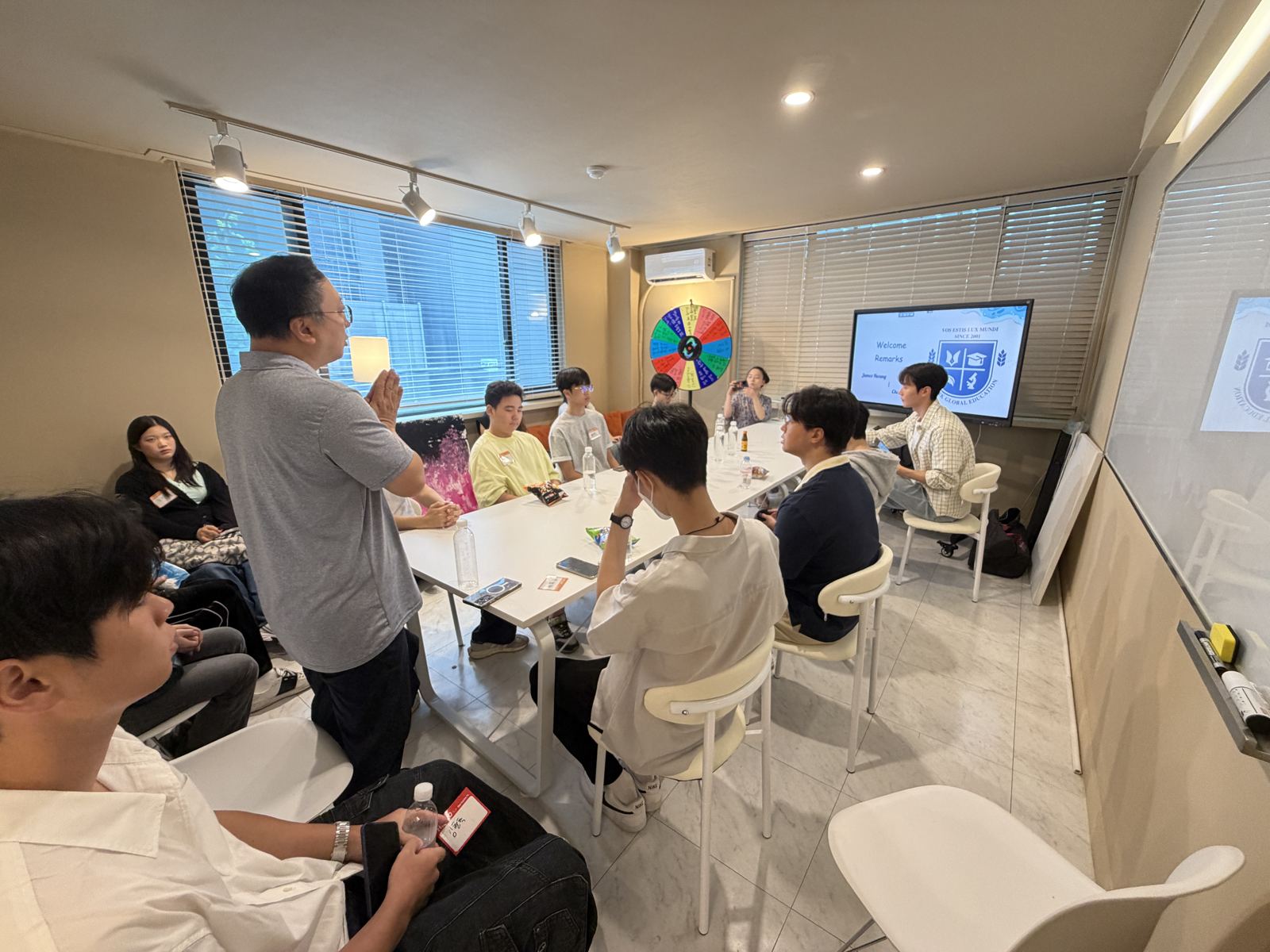
Our Community
The NGA Alumni & Students Gathering and student outings.
Official School Profile
New Ark Global Academy — 2026–2027
Our official School Profile provides a detailed reference to NGA's academic curriculum, graduation framework, grading system, school leadership, institutional relationships, and reported outcomes.
Visit or Contact NGA
Address: 2F, 7, Nonhyeon-ro 75-gil, Gangnam-gu, Seoul, Republic of Korea 06247
Telephone: +82-2-6925-1712
Email: registrar@newarkglobal.org
Academic Overview
Academics at New Ark Global Academy
A Strong Foundation. An Individual Direction. A Future of Possibilities.
Our Academic Approach
New Ark Global Academy provides an American-style college-preparatory curriculum for students in Grades 9–12.
NGA's educational model combines foundational academic requirements with individualized academic planning, advanced coursework, research opportunities, and specialized academic exploration.
We believe academic excellence begins with a strong foundation in the core disciplines.
It develops further when students learn to connect knowledge across subjects, investigate their own questions, and consider how their academic interests relate to future study.
The NGA Academic Framework
1. Core Academic Foundations
English, mathematics, science, social studies, religion, and electives provide the foundation of the NGA graduation framework.
2. Advanced Academic Study
Authorized AP coursework allows students to engage with advanced academic concepts and develop skills relevant to college-level study.
3. Major-Specific Academic Exploration
Students can be guided toward subject combinations, enrichment opportunities, and projects related to possible university majors.
4. Research & Independent Inquiry
Research and project-based learning encourage students to formulate questions, examine evidence, and develop original work.
5. Technology & Future Skills
NGA's future-oriented academic vision includes artificial intelligence literacy, digital competency, and opportunities to explore external technology credentials.
6. Character & Purpose
Christian education and service-related opportunities support reflection on ethics, responsibility, and the purpose of learning.
Academic Independence
Students are expected to develop responsibility for their academic progress.
Individualized course planning recognizes differences in prior study, academic preparation, and educational goals while maintaining the school's graduation requirements.
Explore NGA Academics
Core Curriculum & Graduation
Understand the foundation of NGA's high school academic program.
Advanced Placement
Explore authorized AP coursework and AP Capstone.
Major-Specific Learning
Learn how students can connect academic studies with fields of future interest.
AI & Technology
Explore digital literacy and external certification opportunities.
Research & Capstone
Discover inquiry-driven academic exploration.
Core Curriculum
Core Curriculum & Graduation Requirements
Academic Foundations That Support Future Specialization.
The NGA High School Curriculum
New Ark Global Academy provides a college-preparatory education grounded in core academic disciplines.
Our curriculum is designed to support the development of subject knowledge, communication, quantitative reasoning, scientific understanding, historical awareness, and ethical reflection.
Instruction in English language arts and mathematics draws on Common Core State Standards.
Core Subject Areas
English Language Arts
English study supports reading, writing, interpretation, argumentation, and effective communication.
Students develop skills relevant to academic writing, literary analysis, research, and the clear presentation of ideas.
Mathematics
Mathematics develops quantitative reasoning, analytical thinking, and structured problem-solving.
These skills support further study in scientific, technical, economic, and many other academic fields.
Science
Scientific study introduces students to systematic investigation, evidence-based reasoning, and the principles underlying the natural world.
Social Studies
Social studies helps students explore historical developments, social institutions, political systems, economic relationships, and global issues.
Religion
Religion is part of NGA's required graduation framework and reflects the school's Christian educational identity.
Electives
Elective coursework provides opportunities to pursue interests beyond the required core subjects.
Areas identified in NGA's academic profile include languages, visual and performing arts, and additional academic disciplines.
NGA Graduation Requirements
Students must complete 24 credits in the following categories.
| Academic Area | Required Credits |
|---|---|
| English | 4.0 |
| Mathematics | 4.0 |
| Science | 4.0 |
| Social Studies | 4.0 |
| Religion | 4.0 |
| Electives | 4.0 |
| Total | 24.0 |
Credit Policies
NGA generally awards 1.0 credit for a completed yearlong NGA course and 0.5 credit for a completed semester NGA course.
External coursework recognized under applicable NGA academic policies may be treated according to its documented credit values and the school's published recognition procedures.
Academic Planning for University Preparation
High school graduation requirements and university admission requirements are not identical.
Students considering particular universities or academic majors should review the academic preparation expected by those institutions.
NGA's individualized approach takes these considerations into account when discussing academic pathways.
Advanced Placement
Advanced Placement & AP Capstone
Extending Academic Learning Beyond Standard High School Coursework.
Advanced Academic Opportunities
New Ark Global Academy's academic program includes Advanced Placement coursework across a range of academic disciplines.
AP courses provide students with opportunities to engage with advanced subject matter and develop academic skills relevant to higher education.
NGA's AP offerings are subject to authorization through the College Board AP Course Audit process.
Only courses authorized for the applicable school year are designated as AP on NGA transcripts.
AP Subject Areas
The following subjects appear in NGA's 2026–2027 School Profile. Current availability and authorization must be confirmed.
English
- AP English Language and Composition
- AP English Literature and Composition
Mathematics
- AP Precalculus
- AP Calculus AB
- AP Calculus BC
- AP Statistics
Computer Science
- AP Computer Science A
- AP Computer Science Principles
Science
- AP Biology
- AP Chemistry
- AP Environmental Science
- AP Physics 1: Algebra-Based
- AP Physics 2: Algebra-Based
History & Social Sciences
- AP United States History
- AP European History
- AP World History: Modern
- AP African American Studies
- AP Human Geography
- AP Psychology
- AP Macroeconomics
- AP Microeconomics
- AP United States Government and Politics
- AP Comparative Government and Politics
World Languages
- AP Chinese Language and Culture
- AP French Language and Culture
- AP Latin
Arts
- AP 2-D Art and Design
- AP 3-D Art and Design
- AP Drawing
- AP Art History
- AP Music Theory
AP Capstone
Investigating Questions. Evaluating Evidence. Communicating Ideas.
AP Capstone consists of two College Board courses: AP Seminar and AP Research.
These courses emphasize analytical inquiry, research, evidence-based argumentation, and academic communication.
Students interested in the AP Capstone Diploma must satisfy the applicable College Board award requirements.
Advanced Studies & Future Interests
Advanced coursework can support students exploring different academic directions.
For example, students interested in business may consider economics and statistics, while students interested in engineering may pursue advanced mathematics, physics, or computer science.
AP course selection should be based on student readiness, available authorization, and appropriate academic planning.
AP Grading at NGA
NGA uses an unweighted GPA system.
AP coursework does not receive additional GPA weighting.
Course grades and externally administered AP examination scores represent separate academic assessments.
Major-Specific Pathways
Major-Specific Academic Pathways
Explore Your Interests Before Choosing Your Future.
Discovering Academic Direction
Many students enter university with only a limited understanding of the subjects they intend to study.
At New Ark Global Academy, our educational vision is to encourage students to explore academic interests earlier and more intentionally.
As part of the NGA curriculum, Major-Specific Academic Pathways connect foundational high school subjects with possible university majors, advanced academic opportunities, independent projects, and practical exploration.
Rather than treating a university major as an isolated future decision, each pathway encourages students to understand what different academic fields investigate, which skills they require, and how those fields connect to real-world problems.
How a Major-Specific Pathway Works
Each pathway follows four stages.
Discover
Explore a field through introductory reading, academic subjects, and guided investigation.
Develop
Build relevant knowledge through course selection, advanced study, and subject-specific learning.
Apply
Investigate a question, complete a project, or explore a practical challenge related to the field.
Reflect
Evaluate what the experience reveals about personal interests, strengths, and future academic direction.
Pathway 1 — Business, Economics & Entrepreneurship
Understand Markets. Develop Ideas. Explore Innovation.
Students interested in business can explore how organizations operate, how consumers make decisions, and how economic forces influence society.
Relevant AP Subjects
AP Microeconomics, AP Macroeconomics, AP Statistics, and AP Psychology.
Major-Specific Enrichment Courses
- Introduction to Business & Entrepreneurship
- Marketing & Consumer Behavior
- Business Analytics & Decision-Making
- Financial Literacy & Business Strategy
- Brand Development & Digital Marketing
Example Projects
Students may conduct a consumer survey, analyze the positioning of competing brands, develop a business proposal, or evaluate a market opportunity.
Related University Majors
Business Administration, Economics, Marketing, Finance, Management, and Entrepreneurship.
Pathway 2 — Engineering, Computer Science & Technology
Design Solutions. Understand Systems. Build for Tomorrow.
Engineering and technology connect mathematical reasoning with the development of systems, products, and tools.
Relevant AP Subjects
AP Calculus AB or BC, AP Physics, AP Computer Science A, AP Computer Science Principles, and AP Statistics.
Enrichment Courses
- Introduction to Engineering Design
- Python Programming & Computational Thinking
- Robotics & Intelligent Systems
- Data Structures & Applied Problem-Solving
- Technology Design & Prototyping
Example Projects
Students may create a prototype, develop a simple application, examine an engineering design problem, or apply programming to data analysis.
Related University Majors
Engineering, Computer Science, Data Science, Robotics, and Information Systems.
Pathway 3 — Medicine, Biomedical Science & Public Health
Investigate Life. Understand Health. Explore Scientific Responsibility.
Students interested in the life sciences can examine biological processes, scientific research, and questions related to human health.
Relevant AP Subjects
AP Biology, AP Chemistry, AP Statistics, and AP Psychology.
Enrichment Courses
- Human Anatomy & Physiology
- Introduction to Biomedical Research
- Public Health & Global Health Challenges
- Medical Ethics & Society
- Data Analysis in Health Sciences
Example Projects
Students may conduct a literature review, investigate a public-health question, analyze published health data, or prepare an evidence-based scientific presentation.
Related University Majors
Biology, Biochemistry, Neuroscience, Public Health, Biomedical Engineering, and Pre-Medical Fields.
Pathway 4 — Law, Politics & International Relations
Analyze Institutions. Examine Justice. Understand Global Challenges.
Students interested in law and public affairs can explore political systems, historical developments, legal reasoning, and international questions.
Relevant AP Subjects
AP United States Government and Politics, AP Comparative Government and Politics, AP World History: Modern, AP English Language and Composition, and AP Macroeconomics.
Enrichment Courses
- Introduction to Law & Legal Reasoning
- International Relations & Global Governance
- Public Policy & Social Change
- Debate, Argumentation & Critical Writing
- Ethics, Human Rights & Contemporary Issues
Example Projects
Students may prepare a policy brief, research a comparative political question, participate in structured debate, or investigate a contemporary international issue.
Related University Majors
Political Science, International Relations, Public Policy, History, and Pre-Law Fields.
Pathway 5 — Media, Communication & Journalism
Understand Audiences. Investigate Stories. Communicate With Purpose.
Students interested in communication can explore how information is produced, distributed, interpreted, and used to influence society.
Relevant AP Subjects
AP English Language and Composition, AP Psychology, AP Statistics, and AP United States History.
Enrichment Courses
- Media Studies & Digital Communication
- Journalism & Investigative Writing
- Film, Video & Digital Storytelling
- Media Psychology & Audience Analysis
- Public Relations & Strategic Communication
Example Projects
Students may produce a documentary, write a feature article, investigate digital communication trends, or develop a multimedia storytelling project.
Related University Majors
Communication, Journalism, Media Studies, Film, Public Relations, and Advertising.
Pathway 6 — Art, Design & Architecture
Develop Creative Thinking. Investigate Meaning. Design With Purpose.
Students interested in creative fields can investigate visual expression, design thinking, spatial relationships, and the connection between creative work and its audience.
Relevant AP Subjects
AP Drawing, AP 2-D Art and Design, AP 3-D Art and Design, and AP Art History.
Enrichment Courses
- Design Thinking & Creative Problem-Solving
- Visual Communication & Brand Identity
- Architecture & Spatial Design
- Portfolio Development & Artistic Research
- Digital Design & Emerging Creative Technologies
Example Projects
Students may investigate an architectural concept, develop a visual identity, create a themed portfolio, or explore the role of digital technologies in creative practice.
Related University Majors
Studio Art, Graphic Design, Architecture, Industrial Design, Fashion-related Fields, and Visual Communication.
Pathway 7 — Psychology, Education & Social Sciences
Understand People. Investigate Behavior. Explore Communities.
Students interested in human behavior can study how individuals think, learn, interact, and respond to social environments.
Relevant AP Subjects
AP Psychology, AP Statistics, AP Human Geography, and AP English Language and Composition.
Enrichment Courses
- Developmental Psychology
- Educational Psychology & Learning Sciences
- Social Research Methods
- Sociology & Contemporary Society
- Community Development & Social Innovation
Example Projects
Students may design a survey, investigate educational experiences, analyze social patterns, or explore a community-related challenge.
Related University Majors
Psychology, Education, Sociology, Social Work, and Human Development.
Pathway 8 — Environmental Science & Sustainability
Understand Our Planet. Examine Systems. Explore Sustainable Solutions.
Students interested in the environment can investigate ecological systems, climate-related issues, and the relationship between science, policy, and human activity.
Relevant AP Subjects
AP Environmental Science, AP Biology, AP Chemistry, AP Statistics, and AP Human Geography.
Enrichment Courses
- Sustainability & Environmental Systems
- Climate Science & Society
- Environmental Policy & Economics
- Renewable Energy & Innovation
- Environmental Research Methods
Example Projects
Students may analyze local environmental data, investigate a sustainability proposal, research a climate-related issue, or develop a community awareness initiative.
Related University Majors
Environmental Science, Sustainability, Environmental Engineering, Ecology, and Environmental Policy.
Individualized Pathway Planning
A major-specific pathway should guide exploration rather than limit it.
Students may change their interests or discover connections across disciplines.
For example, a student interested in medicine may also study computer science. A student interested in business may investigate psychology or design. A student interested in politics may find value in economics and data analysis.
The purpose is to develop informed academic direction while preserving the flexibility to explore.
Major-Specific Pathways are part of the NGA curriculum. Students explore their pathway within their regular course of study, alongside their core subjects and AP coursework.
AI & Certifications
Artificial Intelligence & Industry Certifications
Understanding the Technology That Is Changing Our World.
Education in the Age of AI
Artificial intelligence is increasingly influencing how people study, communicate, conduct research, develop products, and solve problems.
Students preparing for the future need more than familiarity with AI tools.
They need to understand what these technologies can do, where they can fail, and how to use them responsibly.
NGA's AI Certificate Program helps students develop technological literacy through learning in artificial intelligence, data, and digital innovation.
Our AI Learning Framework
AI Foundations
Students explore foundational concepts related to artificial intelligence, machine learning, generative AI, and data.
Applied AI
Students investigate how AI technologies may be used in research, business, scientific analysis, communication, and creative work.
Responsible AI
Students examine privacy, bias, misinformation, intellectual property, academic integrity, and the ethical implications of automated systems.
AI & Human Judgment
Students consider the importance of independent reasoning and critical evaluation when working with AI-generated information.
External Learning & Credential Opportunities
Through the NGA AI Certificate Program, students learn with leading technology providers.
Program providers include the following.
Students may explore introductory AI courses, learning paths, cloud training, and qualifying skill-badge opportunities provided by Google.
NVIDIA
Students with appropriate preparation may explore training in deep learning, data science, generative AI, and related computing topics.
Selected NVIDIA courses and workshops offer completion or competency certificates.
Amazon Web Services (AWS)
Students may explore cloud and AI learning resources, including preparation for the AWS Certified AI Practitioner credential where appropriate.
AWS independently determines examination requirements and certification eligibility.
Anthropic
Students may explore AI literacy and responsible AI learning resources concerning generative AI, critical thinking, and human-AI collaboration.
Formal certificates are awarded where the issuing organization offers one for the completed course or assessment.
Applying AI Across Academic Interests
Business: Explore market research, data analysis, and business decision-making.
Engineering: Investigate programming, automation, and technical problem-solving.
Science: Examine the use of computational tools in scientific research.
Art & Design: Explore creative technologies while considering originality and intellectual property.
Communication: Analyze AI-generated media, digital information, and responsible content creation.
Social Sciences: Investigate the societal and ethical implications of emerging technologies.
Learning to Think Beyond the Tool
AI can assist learning, but it cannot replace the student's responsibility to reason, evaluate evidence, or develop original understanding.
NGA's educational vision emphasizes the thoughtful use of technology as a complement to academic independence.
External Credential Information
Certificates, skill badges, course completion records, and professional certifications are different types of credentials.
Any external credential is issued solely by its provider, subject to that provider's terms, assessments, age requirements, and eligibility rules.
References to external organizations do not imply that NGA is an authorized training partner or that completion of NGA coursework guarantees a credential.
Research & Capstone
Research & NGA Capstone
From Academic Curiosity to Independent Investigation.
Learning to Ask Better Questions
Research begins with curiosity.
Students encounter questions that cannot always be answered by memorizing information or repeating existing explanations.
Research encourages students to investigate evidence, evaluate alternative interpretations, and develop conclusions supported by reasoned analysis.
NGA's academic profile includes research-oriented learning and project-based academic opportunities.
The NGA Capstone
The NGA Capstone is an individualized academic experience in which students investigate a meaningful question connected to their interests or intended field of study.
The capstone emphasizes inquiry, research methods, academic integrity, and communication.
Stage 1 — Identify a Question
Students select an area of interest and develop a focused question suitable for investigation.
Stage 2 — Review Existing Knowledge
Students examine relevant research, identify different perspectives, and understand what is already known.
Stage 3 — Develop a Method
Students consider an appropriate research or project approach.
This may involve literature analysis, data analysis, surveys, interviews, creative inquiry, or other suitable methods, subject to school approval and ethical requirements.
Stage 4 — Conduct the Investigation
Students collect or analyze appropriate evidence, document their work, and refine their conclusions.
Stage 5 — Present the Results
Students communicate their findings through a research paper, presentation, portfolio, prototype, or other approved academic outcome.
Interdisciplinary Research
Research questions often cross traditional academic boundaries.
A project about consumer behavior may combine business and psychology.
A project investigating AI in healthcare may involve computer science, biology, and ethics.
A project about urban design may connect architecture, sociology, and environmental science.
Such connections allow students to recognize the relationship between different fields of knowledge.
NGA Capstone & AP Capstone
NGA Capstone and College Board AP Capstone are distinct.
AP Seminar and AP Research are College Board courses with their own established requirements.
Any NGA-developed capstone course is governed separately by NGA's approved curriculum and assessment policies.
Grading
Academic Standards & Grading Policies
Clear Expectations. Consistent Academic Records.
Our Grading System
NGA maintains an established grading scale and independently issues NGA academic transcripts.
| Grade | Percentage | GPA Value |
|---|---|---|
| A | 90–100 | 4.0 |
| B | 80–89 | 3.0 |
| C | 70–79 | 2.0 |
| D | 65–69 | 1.0 |
| F | Below 65 | 0.0 |
GPA Calculation
NGA calculates cumulative GPA on an unweighted 4.0 scale.
The formula is:
Cumulative GPA = Sum of (Course Grade Points × Credits) ÷ Total GPA-Bearing Credits
AP courses receive no additional GPA weighting.
Class Rank
NGA does not rank students.
Credit Calculation
Completed yearlong NGA courses generally carry 1.0 credit.
Completed semester NGA courses generally carry 0.5 credit.
Yearlong NGA final percentages are calculated from the mean of the two semester percentages and rounded to a whole number, with .5 rounded upward.
Penn Foster Coursework
NGA may recognize completed Penn Foster coursework toward its own graduation requirements.
Recognized courses retain the credit value awarded by Penn Foster.
Penn Foster percentages are rounded and converted using NGA's grading scale for inclusion in the NGA cumulative GPA.
The official Penn Foster transcript accompanies the NGA transcript when applicable.
Official Records
NGA independently maintains its academic records.
For information about NGA-issued transcripts or the school's academic policies, contact registrar@newarkglobal.org.
Calendar
Academic Calendar
Academic Planning Across the School Year.
Academic-Year Structure
NGA's academic program is organized around fall and spring semesters.
Students may also follow individualized accelerated schedules and complete coursework throughout the year where applicable.
2026–2027 School Calendar
Fall Semester
The first semester of the academic year. A semester percentage is recorded for each course.
Spring Semester
The second semester. Final grades for yearlong courses are the mean of the two semester percentages, rounded to a whole number (.5 rounds up).
Year-Round Accelerated Study
Students may also study year-round on individualized accelerated schedules.
Individual Academic Scheduling
Because NGA incorporates individualized educational planning, student schedules may differ according to course selection, academic progress, and the requirements of the relevant educational program.
Academic Calendar Information
For official confirmation of academic dates, school holidays, records deadlines, or graduation scheduling, please contact the administration.
The external AI learning resources used in Page 12 are based on the providers' own published training information: Google offers AI learning paths and skill badges; NVIDIA distinguishes course certificates from certifications; AWS offers the AI Practitioner certification; and Anthropic publishes AI fluency learning resources. None of those facts alone establishes a partnership with NGA.
Google Cloud+3
Preparing for Tomorrow
Future-Ready Education
Preparing Students Not Only for the Next Step, but for What Comes After.
What Does It Mean to Be Future-Ready?
The world students will enter is changing.
Artificial intelligence, digital technology, scientific discoveries, economic developments, and global challenges continue to reshape the way people work, communicate, and solve problems.
Preparing students for this environment requires more than introducing them to the latest technologies.
It requires the ability to think critically, learn independently, adapt to unfamiliar circumstances, communicate effectively, and make responsible decisions.
At New Ark Global Academy, we believe future readiness begins with a strong academic foundation and develops through inquiry, exploration, and practical experience.
The NGA Future-Ready Framework
NGA's future-oriented educational vision is built around five priorities.
Academic Depth
Students need a strong foundation in the academic disciplines to engage with complex ideas and continue learning.
Technological Literacy
Students should understand the potential and limitations of emerging technologies, including artificial intelligence.
Interdisciplinary Thinking
Students should be able to recognize connections between academic disciplines and apply different perspectives to a question.
Practical Problem-Solving
Students should have opportunities to move beyond theoretical understanding and examine how knowledge can be used in meaningful contexts.
Character & Responsibility
Students should learn to consider the ethical and social consequences of their decisions.
A School for Developing Academic Direction
Future readiness also requires students to understand their own interests.
Through individualized academic planning and opportunities for specialized exploration, NGA seeks to help students investigate potential fields of study before entering university.
This process is not about forcing students to choose a career prematurely.
It is about giving them opportunities to discover what interests them, understand the knowledge required to pursue it, and become more intentional learners.
Technology With Human Judgment
We believe technology should expand opportunities for learning without replacing intellectual responsibility.
Students need the ability to question information, identify unreliable claims, recognize ethical concerns, and determine when human reasoning is essential.
These abilities matter regardless of the career or academic field they ultimately pursue.
The Future Is Built Through Learning
The most important outcome of future-ready education is not mastery of a single technological tool.
It is the development of students who can continue learning as technology, society, and professional expectations change.
Career & Experiential Learning
Real-World Learning & Career Exploration
Connecting Academic Knowledge to Practical Experience.
Learning Beyond Theory
Academic knowledge is an essential foundation for future study.
However, students often deepen their understanding when they have opportunities to consider how academic concepts relate to real situations.
NGA's educational vision supports opportunities for career exploration, project-based learning, and practical engagement that can help students connect their interests with possible future fields.
Career Exploration
Exploring a profession involves more than knowing its name.
Students benefit from understanding the questions professionals investigate, the skills they use, and the responsibilities associated with their work.
Career-related activities may include research about professional fields, conversations with practitioners, subject-focused projects, and appropriate workplace observation.
Job-Shadowing
NGA's school profile identifies a Job-Shadowing Program among its co-curricular opportunities.
Job-shadowing can provide students with opportunities to observe professional environments and consider how classroom knowledge relates to different careers.
Specific experiences depend on availability, eligibility, supervision, and the requirements of participating organizations.
NGA Career Exploration Labs
As part of NGA's future-ready educational development, subject-specific career exploration labs could connect academic interests with practical challenges.
Business & Entrepreneurship Lab
Students investigate how businesses identify customer needs, evaluate markets, and develop products or services.
Technology & Innovation Lab
Students explore technology-based problem-solving through coding, digital tools, or appropriate design projects.
Research & Science Lab
Students investigate questions through scientific reasoning, evidence analysis, or supervised research activities.
Media & Creative Industries Lab
Students develop communication and creative projects while examining audiences, messaging, and media production.
Social Impact Lab
Students investigate a community challenge and develop an evidence-informed proposal for responding to it.
Experience, Reflection & Growth
A meaningful practical experience should include reflection.
Students should be encouraged to consider what they learned, what challenged their assumptions, and how an experience influenced their understanding of a subject or profession.
Career Preparation as Academic Exploration
NGA does not define career preparation as selecting a single profession in high school.
Instead, we believe early exploration can help students make more informed academic decisions, discover new interests, and understand the relationship between education and future opportunities.
College & Career Preparation
College & Career Preparation
Developing Academic Readiness, Direction, and Independence.
Preparing for Higher Education
University preparation is a long-term process that involves more than the submission of an application.
Students benefit from developing academic skills, understanding their interests, evaluating educational opportunities, and taking responsibility for their learning.
At NGA, individualized academic planning considers a student's prior educational experiences, academic preparation, and intended university goals.
Academic Readiness
A strong secondary-school education provides the foundation for future academic success.
Students preparing for university should consider appropriate coursework, subject-specific preparation, writing ability, quantitative reasoning, independent study habits, and other expectations relevant to their intended field.
Understanding Academic Interests
Choosing an academic major is an important decision, but students may not initially understand the full scope of the field they are considering.
Major-specific exploration can help students examine different subjects and gain a more informed understanding of possible university studies.
Students are encouraged to consider not only which field interests them, but also why it interests them and which questions they would like to investigate.
Research, Projects & Academic Development
Research and independent projects can help students develop skills relevant to higher education.
These experiences may involve defining a question, evaluating evidence, developing an argument, communicating findings, or creating an academic or artistic outcome.
College & Career Counseling
NGA's college and career counseling function supports students as they consider educational pathways and prepare for postsecondary study.
University requirements differ by institution, country, degree program, and applicant background.
Students should review the requirements relevant to their particular goals.
Beyond University Admission
We believe successful preparation should extend beyond receiving an admission decision.
Students should enter higher education with a developing sense of academic direction, the capacity to manage independent work, and the ability to continue learning in unfamiliar environments.
Christian Education
Christian Education & Character
Developing Knowledge With Wisdom, Integrity, and Purpose.
Our Faith-Based Educational Identity
New Ark Global Academy is an independent Christian educational institution.
Our educational philosophy recognizes the importance of intellectual development alongside personal character, ethical reflection, and responsibility toward others.
Christian education forms part of NGA's academic structure and school identity.
We believe that academic ability should be accompanied by the capacity to consider how knowledge and decisions affect other people.
Religion in the NGA Curriculum
Religion is one of the six required academic categories in NGA's graduation framework.
Students must complete four credits in religion as part of the 24-credit NGA diploma requirements.
This requirement reflects the importance of Christian education within the school's academic philosophy.
Faith & Intellectual Inquiry
Faith-based education can encourage students to explore questions of meaning, identity, purpose, moral responsibility, and the relationship between beliefs and actions.
At NGA, we believe students should develop the ability to engage thoughtfully with important questions and reflect on their responsibilities as individuals and members of society.
Character in a Changing World
Technological and academic knowledge create opportunities, but they also require judgment.
As artificial intelligence and other technologies develop, students will encounter questions involving truth, privacy, fairness, responsibility, and the effects of their decisions on others.
NGA's Christian educational identity emphasizes the importance of ethical reflection alongside academic development.
Service & Compassion
Learning should also encourage students to recognize the needs of others.
NGA's co-curricular opportunities include community service and faith-based activities.
Through service, students have opportunities to consider the responsibilities that accompany their abilities and opportunities.
Faith-Based School Activities
NGA's School Profile identifies:
- Faith-Based Courses & Mission Projects
- EM Worship Team
- Philippines Mission Trip
- Community Service Opportunities
Specific activities may vary according to the academic year and school program.
Character as a Foundation for Leadership
We believe leadership requires more than confidence or achievement.
It also requires integrity, responsibility, empathy, and a willingness to consider the consequences of one's actions.
Our goal is to help students develop the capacity to pursue academic and personal goals while recognizing their responsibilities toward others.
Student Life
Student Life at NGA
Developing Interests, Building Community, and Learning Through Participation.
Beyond the Academic Curriculum
Student life provides opportunities to develop interests, participate in the school community, and build skills that complement academic study.
NGA's co-curricular program includes opportunities involving student leadership, journalism, STEM exploration, creative projects, community service, and faith-based activities.
Student Leadership
Student Government
Student government provides opportunities for student participation and school-related leadership.
Students engaged in leadership activities can develop communication, collaboration, and organizational skills.
Academic Organizations
STEM Club
STEM-focused activities encourage interest in science, technology, engineering, and mathematics.
Academic clubs can provide opportunities to explore subjects through questions, projects, and shared learning experiences.
Communication & Journalism
Youth Journalist Program
NGA's school profile identifies a Youth Journalist Program in connection with Gangnam Post.
Journalism-related activities provide opportunities for students to investigate issues, conduct interviews, and develop written communication.
Creative Projects
Book Publishing Project
The school's co-curricular profile includes book publishing as an opportunity for student creative and academic development.
Deco-Coding Science Project
NGA's profile also identifies the Deco-Coding Science Project among its co-curricular activities.
Faith & Community
EM Worship Team
The EM Worship Team is part of NGA's faith-based co-curricular program.
The Value of Participation
Student activities can help learners recognize interests beyond their formal coursework.
Through collaboration, creative work, leadership, and service, students have opportunities to explore different roles and develop skills relevant to future education and community participation.
Life at NGA
All photosNGA Alumni & Students Gathering
Alumni and current students together for welcome remarks, games, food and a day of reconnecting.
School Trip
Students exploring the city together on a school outing.
Classes & Study
Seminars, counseling sessions and focused independent study in our Gangnam learning spaces.
Service & Global Leadership
Community Service & Global Leadership
Understanding Our Responsibilities Beyond Ourselves.
Learning Through Service
At NGA, we believe education should encourage students to consider how their knowledge, time, and abilities can benefit others.
Community service provides opportunities to engage with people and situations outside a student's ordinary academic routine.
These experiences may help students develop empathy, responsibility, communication, and greater awareness of social needs.
Community Engagement
NGA's school profile identifies community service among its co-curricular opportunities.
Students may participate in approved activities that connect them with local communities, service organizations, or other appropriate initiatives.
Philippines Mission Trip
An international mission experience listed among NGA's co-curricular activities.
Community Service
Approved service activities that connect students with local communities and service organizations.
Faith-Based Courses & Mission Projects
A special program connecting Christian education with service and mission.
The Duke of Edinburgh's International Award
NGA is a Licensed Award Centre, and students can take part through the Award's established structure.
Global Etiquette Training
A co-curricular program that prepares students for respectful engagement in international settings.
Global Awareness
NGA's international community and educational opportunities provide a foundation for considering different cultural perspectives.
Students preparing for a connected world benefit from developing the ability to communicate respectfully, understand different contexts, and approach unfamiliar situations with curiosity and responsibility.
The Duke of Edinburgh's International Award
NGA identifies itself as a licensed Award Centre for The Duke of Edinburgh's International Award.
The award encourages personal development through its established program structure.
Student participation and recognition are subject to the applicable requirements of the Award.
Global Etiquette & Cultural Understanding
NGA's co-curricular opportunities include Global Etiquette Training.
Understanding communication expectations, cultural practices, and respectful interaction can support students preparing for international academic and social environments.
Faith & Mission
The school's profile also identifies mission-related activities, including the Philippines Mission Trip.
These activities reflect NGA's faith-based identity and interest in community engagement.
Leadership Through Responsibility
We believe effective leadership involves understanding others, recognizing problems, and acting responsibly.
Service and global engagement provide opportunities for students to reflect on the relationship between personal achievement and contributions to the wider community.
Student Achievements
Student Achievements & Publications
Recognizing Academic Exploration, Creativity, and Meaningful Accomplishment.
Celebrating Student Development
New Ark Global Academy recognizes student achievements in academics, research, creative work, leadership, and community participation.
The school's 2026–2027 profile includes student-recognition categories spanning international academic competitions, STEM, writing, and leadership.
Individual award entries should include verified dates, results, and the student's institutional affiliation at the time.
Academic Recognition
Programs and competitions identified in the NGA School Profile include:
- John Locke Essay Competition
- The New York Times Essay Contest
- GENIUS Olympiad
- Scholastic Art & Writing Awards
STEM Recognition
The School Profile also identifies:
- AMC / AIME
- Math Kangaroo
- Caribou Contest
- Korea Olympiad in Informatics
Leadership Recognition
Recognition categories include HOBY Korea and The Duke of Edinburgh's International Award.
Student Publications
NGA's academic and co-curricular opportunities include research, writing, and creative projects.
Student work can be documented through publications, research reports, exhibitions, academic presentations, or portfolios.
Featured Student Work
Book Publishing Project
Students develop original creative or academic writing toward publication.
Deco-Coding Science Project
A project combining coding with scientific investigation.
STEM Research Projects
Student-led research projects in science, technology, engineering and mathematics.
Youth Journalist Program
Students investigate issues, conduct interviews and publish reporting.
Academic Growth Through Experience
We value the process of developing an idea, responding to challenges, and completing meaningful work.
Student achievements offer one way to recognize this development and share the work of our school community.
Academic Pathways & Diplomas
Diplomas & Academic Pathways
Individualized Learning Within Established Graduation Requirements.
The NGA High School Diploma
New Ark Global Academy independently maintains its graduation requirements and awards the NGA high school diploma.
Students completing the NGA graduation framework must satisfy the applicable academic requirements across English, mathematics, science, social studies, religion, and electives.
NGA independently maintains academic records and issues its own transcript.
An Individualized Academic Approach
Students enter secondary education with different prior coursework, educational experiences, and academic goals.
NGA's individualized planning model recognizes these differences while maintaining defined academic requirements.
Students may pursue advanced coursework, research, and additional educational opportunities as appropriate to their academic plans.
Graduation Requirements
The NGA diploma requires 24 credits.
| Subject | Credits |
|---|---|
| English | 4 |
| Mathematics | 4 |
| Science | 4 |
| Social Studies | 4 |
| Religion | 4 |
| Electives | 4 |
| Total | 24 |
Additional Diploma Pathways
For eligible students, NGA supports a separate Penn Foster High School diploma pathway.
Penn Foster independently determines enrollment eligibility, acceptance of transfer credits, and graduation requirements.
Students satisfying both institutions' separate requirements may qualify for two independently awarded diplomas.
Preparing Beyond Graduation
High school graduation is an important academic milestone, but preparation for university and future pursuits also requires attention to academic interests, intellectual skills, personal responsibility, and continued development.
NGA's educational vision connects graduation planning with the broader preparation of students for future opportunities.
Penn Foster Pathway
Penn Foster High School Dual-Diploma Pathway
Two Independent Institutions. Two Separate Graduation Frameworks.
Our Academic Partnership
New Ark Global Academy maintains an academic partnership with Penn Foster High School, an accredited U.S. online high school.
This relationship supports eligible NGA students who pursue a separate Penn Foster diploma while continuing their NGA educational pathway.
NGA and Penn Foster maintain separate academic requirements and independently issue their respective diplomas.
How the Pathway Works
Academic Planning at NGA
Students follow academic plans that account for their prior academic work, educational interests, and NGA graduation requirements.
Penn Foster Credit Evaluation
Eligible NGA credits may be submitted to Penn Foster for independent transfer-credit evaluation.
Penn Foster determines which credits, if any, are accepted.
Remaining Penn Foster Coursework
Students pursuing the Penn Foster diploma must complete Penn Foster's remaining graduation requirements as determined by Penn Foster.
Independent Graduation
Students who independently satisfy both schools' requirements may earn an NGA diploma and a Penn Foster High School diploma.
Academic Records
NGA independently maintains its transcript.
Penn Foster separately maintains its official transcript.
NGA may recognize completed Penn Foster coursework toward NGA graduation requirements in accordance with NGA's academic policies.
The official Penn Foster transcript accompanies the NGA transcript when applicable.
Accreditation & Institutional Independence
Penn Foster High School's accreditation applies to Penn Foster and its own educational programs.
Penn Foster's accreditation does not extend to NGA or NGA-issued diplomas.
The dual-diploma pathway should not be interpreted as automatic admission, guaranteed credit transfer, or guaranteed completion of either institution's diploma.
Additional Information
Eligibility, transfer-credit acceptance, graduation requirements, and enrollment decisions concerning Penn Foster are determined independently by Penn Foster.
For information about NGA's role in the pathway, contact the school.
University Outcomes
Academic Performance & University Outcomes
Documenting Educational Progress and Post-Secondary Results.
Our Commitment to Academic Preparation
New Ark Global Academy's educational program emphasizes academic foundations, individualized learning, advanced study, and preparation for higher education.
The school's official profile reports academic performance and university outcomes for NGA students.
The profile separately identifies broader counseling outcomes involving students who attended other schools.
NGA Student Performance & Outcomes
NGA's 2026–2027 School Profile reports the following:
Average SAT Score
Reported over a three-year period.
Average TOEFL iBT Score
Reported in the School Profile.
International University Matriculation
Reported for NGA students.
Graduates Accepted to Top 50 U.S. Universities
Reported for NGA graduates.
The profile identifies these as cumulative NGA student figures from the school's founding in 2019 through 2026, with the SAT measure covering three years.
Organization-Wide Counseling Results
NGA's School Profile separately reports the broader organization's college counseling results.
Students Served
University Acceptance Rate
Organization-Wide Operation as of 2026
These figures include students who received NGA counseling while attending other secondary schools.
They do not represent results exclusively from NGA's enrolled or graduating students.
Selected University Admission Offers
Students advised by NGA have received undergraduate admission offers from institutions identified in the School Profile, including:
- Columbia University
- Cornell University
- Dartmouth College
- Duke University
- Georgetown University
- Carnegie Mellon University
- Georgia Institute of Technology
- University of California, Berkeley
- University of California, Los Angeles
- University of Michigan
- New York University
- Boston University
- University of Wisconsin–Madison
These offers include students advised by NGA who were enrolled at other schools.
The list reflects admission offers, not necessarily enrollment or matriculation.
Beyond Admissions Results
NGA's educational philosophy recognizes that learning should not be defined by university admission alone.
Academic preparation, intellectual curiosity, research, responsible independence, and personal development remain important outcomes of secondary education.
Our goal is to support students as they prepare for the next stage of their education and continue developing the ability to learn throughout their lives.
Admissions Overview
Admissions to New Ark Global Academy
Discover an Educational Environment Built Around Individual Academic Development.
Explore NGA
New Ark Global Academy offers a private, faith-based hybrid high school program for Grades 9–12.
Our academic approach combines an American-style college-preparatory curriculum, individualized academic planning, advanced educational opportunities, and Christian education.
We recognize that students may come from different educational backgrounds and pursue different academic goals.
Who Is NGA For?
Students and families considering NGA may be interested in an educational environment that emphasizes:
American-Style Academic Preparation
A high school curriculum organized around defined academic requirements and subject disciplines.
Individualized Learning
Academic planning that considers a student's previous studies and future educational goals.
Advanced Academic Opportunities
AP coursework, research, and subject-focused academic exploration.
Future-Oriented Development
An educational vision connecting traditional academics with technological literacy, interdisciplinary thinking, and future academic interests.
Christian Education
A faith-based educational identity that includes religion within the graduation requirements.
Understanding Our Academic Program
NGA independently maintains its academic requirements and issues its own diploma and transcript.
Students are encouraged to review the academic program, graduation requirements, and applicable educational pathways before beginning the admissions process.
Begin an Inquiry
Our Admissions Office can provide information about NGA's educational model and applicable admissions procedures.
How to Apply & Transfer
How to Apply
Begin With an Understanding of Your Academic Background and Goals.
Starting the Admissions Process
Prospective families are encouraged to begin by learning about NGA's academic program and educational philosophy.
The Admissions Office can provide information about the school's structure, graduation requirements, and applicable application procedures.
Admissions Steps
Step 1 — Admissions Inquiry
Contact NGA to share information about the prospective student's grade level, academic background, and educational goals.
Step 2 — Academic Background Review
Provide relevant academic information for the school's review, according to the approved admissions requirements.
Step 3 — Program Consultation
Discuss the NGA educational model, academic expectations, and potential educational pathway.
Step 4 — Application Submission
Complete the required school application materials according to the officially communicated procedures.
Step 5 — Enrollment & Academic Planning
If admission is offered and accepted, complete the required enrollment steps and establish an appropriate academic plan.
Transfer Students
Students transferring from another educational institution may have completed coursework using different grading and credit systems.
NGA considers prior academic experience when discussing an educational pathway.
Recognition of previous coursework is subject to the school's approved academic policies.
Students interested in the Penn Foster diploma pathway should understand that Penn Foster independently evaluates transfer-credit eligibility.
Required Application Materials
The Admissions Office provides the current list of application documents, forms, assessment requirements and deadlines during the inquiry and consultation stages.
Families should be ready to share the student's previous academic records, which NGA reviews during the academic review. Transfer coursework is considered under NGA's approved academic policies.
For the current requirements, contact the Admissions Office at registrar@newarkglobal.org or +82-2-6925-1712.
Admissions Contact
New Ark Global Academy Admissions Office
Injeong Cho
Telephone: +82-2-6925-1712
Email: registrar@newarkglobal.org
FAQs
Frequently Asked Questions
Learn More About NGA's Education, Academics, and Diploma Pathways.
What kind of school is NGA?
New Ark Global Academy is a private, faith-based hybrid high school in Seoul, South Korea, providing an American-style college-preparatory program for Grades 9–12.
When was NGA established?
New Ark Global Academy was founded in 2019.
Is NGA an online school?
NGA operates a hybrid educational model combining online coursework and in-person academic support.
What is NGA's educational philosophy?
NGA's educational philosophy emphasizes recognizing student potential, guiding intellectual and personal development, and preparing students to apply their knowledge meaningfully.
What does E + DUCA + TION mean?
E + DUCA + TION is NGA's symbolic interpretation of the ideas associated with education: drawing forth potential, guiding development, and viewing learning as a continuing process of growth.
Does NGA offer Advanced Placement courses?
NGA's academic program includes AP coursework subject to authorization through the College Board AP Course Audit process for the applicable academic year.
What is AP Capstone?
AP Capstone is a College Board program consisting of AP Seminar and AP Research. Students pursuing the AP Capstone Diploma must satisfy the College Board's award requirements.
What are major-specific academic pathways?
Major-specific pathways are part of the NGA curriculum. They help students connect academic subjects, research opportunities, and projects with potential fields of university study.
Their purpose is to encourage informed exploration without requiring students to select a fixed career in high school.
Does NGA offer artificial intelligence education?
NGA's school profile identifies AI certificate opportunities among its specialized programs.
Specific courses, external credential opportunities, and student eligibility are subject to the offerings and requirements of the relevant organizations.
Can NGA students earn external technology credentials?
Students may explore eligible external learning and credential opportunities. Any certificate or certification is awarded independently by the issuing provider and is subject to its requirements.
Does NGA have a Christian curriculum?
Yes. NGA is a faith-based institution, and religion is one of the required academic categories for graduation.
How many credits are required to graduate?
NGA requires 24 credits, including four credits each in English, mathematics, science, social studies, religion, and electives.
Does NGA issue its own diploma?
Yes. NGA independently issues its own diploma and transcript.
Can students also earn a Penn Foster diploma?
Eligible students may pursue a separate Penn Foster High School diploma and must independently satisfy its requirements.
Is NGA accredited through Penn Foster?
No. NGA and Penn Foster are separate institutions. Penn Foster's accreditation does not extend to NGA.
Does NGA use a weighted GPA?
No. NGA uses an unweighted 4.0 GPA system.
Does NGA rank students?
No. NGA does not rank students.
Where can I find NGA's official School Profile?
The official 2026–2027 School Profile is available through the website's School Profile link.
What is NGA's CEEB code?
NGA's CEEB code is 017620.
How can I contact NGA?
Contact NGA at +82-2-6925-1712 or registrar@newarkglobal.org.
Contact
Contact New Ark Global Academy
Connect With Our School.
We Welcome Your Inquiry
New Ark Global Academy welcomes inquiries concerning its educational philosophy, academic program, admissions, school operations, and official academic documentation.
Please contact the appropriate school office for further information.
School Contact Information
New Ark Global Academy
2F, 7, Nonhyeon-ro 75-gil, Gangnam-gu, Seoul, Republic of Korea 06247
Telephone: +82-2-6925-1712
Email: registrar@newarkglobal.org
CEEB Code: 017620
School Leadership & Administration
Head of School: Dr. James Hwang
Principal: Esther Hwang
College & Career Counselor: Samuel Hwang
Admissions Office: Injeong Cho
Send an Inquiry
Visit NGA
New Ark Global Academy
2F, 7, Nonhyeon-ro 75-gil, Gangnam-gu, Seoul, Republic of Korea 06247
서울특별시 강남구 논현로75길 7, 2층
Official School Profile
Learn more about NGA's academic program, graduation framework, and institutional information.
Home
Photo Gallery
Moments from events, trips, classes and our campus.
NGA Alumni & Students Gathering
Alumni and current students together for welcome remarks, games, food and a day of reconnecting.
School Trip
Students exploring the city together on a school outing.
Classes & Study
Seminars, counseling sessions and focused independent study in our Gangnam learning spaces.
Our Campus
Reception, classrooms, study pods and meeting rooms at NGA.